Key takeaways
Agile project management is gaining traction in the pharmaceutical industry, but adoption requires careful alignment with regulatory requirements such as FDA/IEC standards and the AAMI TIR45 guide.
Remote teams are now standard across pharma companies; the organizations that manage them best invest in integrated tools that connect resource planning with skills-based allocation.
Investor confidence in pharmaceutical companies depends on clear portfolio roadmaps, measurable milestones, and real-time dashboards that provide genuine visibility into project progress.
Cloud-based project management is no longer optional — mobile access, real-time collaboration, and enterprise-wide visibility are baseline requirements for any transformation program.
Project managers in the life sciences industry are increasingly expected to lead organizational change, not just deliver products — making change management a core competency for PMO leaders.
Table of Contents
1. Agile project management practices in the pharmaceutical industry
2. Remote teams are now standard for life sciences organizations
3. Bringing investors on the project journey
4. How pharmaceutical organizations are moving project management to the cloud
5. APIs and integrations improve the project management experience for pharma teams
6. Project managers now lead organizational change in pharma and life sciences
Frequently asked questions about organizational change pharma and life sciences
Conclusion
1.Agile project management practices in the pharmaceutical industry
About 15 years ago, the software industry faced similar problems to those the medical technology and pharmaceutical industry confronts today. University students across all disciplines now complete projects using agile methods — splitting into cross-functional, self-organizing teams of scrum masters, product owners, and development leads. Traditional requirements have given way to user stories and burn-down charts, while "show and tells" replace formal status reports.
Executives frequently misread the agile manifesto. The common misconceptions: that team members stop producing documentation; that scrum is an excuse to work without structure; that it is too loose for regulatory controls; that delivery quality will suffer. The experience of pharma companies that have tried agile properly tells a different story.
What is agile project management?
In a recent interview on Project Management Paradise, "Agile Methodology Insights", Frank Balogh (AOL) described agile practices:
"In a sense, agile is like jazz. It's like improv in a way. It's not sheet music. We tend to now work in a world which asks us to deliver products quicker than maybe traditional models allow us."
What agile means for medical devices and drugs development in pharma
Given the proven success of agile in software, a natural question for pharmaceutical companies and medical device manufacturers is: can agile adoption work in regulated settings? Pharmaceutical and medical device regulations do not prescribe a fixed lifecycle model, but activities are still presented in a sequential manner, which naturally pulls organizations back toward waterfall development. Several medical device manufacturers have adopted agile practices while maintaining regulatory compliance — though conflicts still arise and teams must decide when to favor agility over formality.
Scrum team members need both technical expertise and knowledge of their regulatory guidelines — FDA/IEC regulations, security requirements, and technical standards. The Association for the Advancement of Medical Implementation (AAMI) released the TIR45 in 2012, guiding medical device development companies on how to use agile under quality regulatory processes. It is a strong reference point and demonstrates clear alignment with the IEC 62304 standard.
Scrum is not only an agile software development method. It is a framework that reduces the complexity of product development into short cycles called sprints. Teams document only what must be documented; the difference with other methodologies is the efficiency of that documentation. Daily scrum meetings serve as a communication and collaboration tool — transparency on what each team member did yesterday and what the team plans today. In many ways, it is 21st century Athenian democracy: communities of people with differing skill sets building the right solution in a timely fashion.
In scrum, clients and users participate in product development from inception — through "show and tell" reviews at the end of each sprint. One common accusation is that agile has no planning. Incorrect. There is constant real-time planning. Each user story is agreed during sprint planning, with new requirements absorbed immediately. Team members and regulatory activities map into the agile cycle in a time-boxed sequence.
Agile practices in non-software projects will keep growing. Agile is a logical way for teams to self-organize and deliver functionality in pre-agreed, manageable chunks. The principles are straightforward — but cultural and behavioral changes are not. The most difficult aspect of applying agile in the pharmaceutical industry is building trust between executives, the PMO, and project teams. To return to Frank Balogh's description: in agile, senior managers choose the instruments and the musicians, but once the session starts, they need to sit back and enjoy the music.
Agile is a way of working that relies heavily on having a good tool for managing workflow. Find a suitable tool and plan to invest in configuring it for your needs.
2. Remote teams are now standard for life science organizations
Geographically dispersed teams offer significant benefits — efficiency, cost savings, and the ability to select the best-skilled people regardless of location.
While working on a resource plan with a large US-based pharmaceutical company, a revealing situation emerged. An experienced pool of remote resources was available and ready to work — but the centralized PMO had no idea they existed. The resource pool was identified in a few hours by contacting external line managers and HR personnel for their lists of available staff. The project management tool integrated with the corporate HR system, so resource allocation could happen in real-time within the platform. (See Point 6 — "Project managers now lead organizational change in pharma and life sciences.") Once the resource pool joined the platform, the team carried out skills-based resource allocation.
The next step was to align this cross-functional team around the process. Stringent daily check-ins kept communication clear and frequent on user stories and progress. Trust was built and isolation avoided through fair, consistent feedback. Recognizing successes was also handled through the tool.
For pharma companies planning ahead: invest in a tool capable of coordinating remote teams at scale.
3. Brining investors on the project journey in life sciences
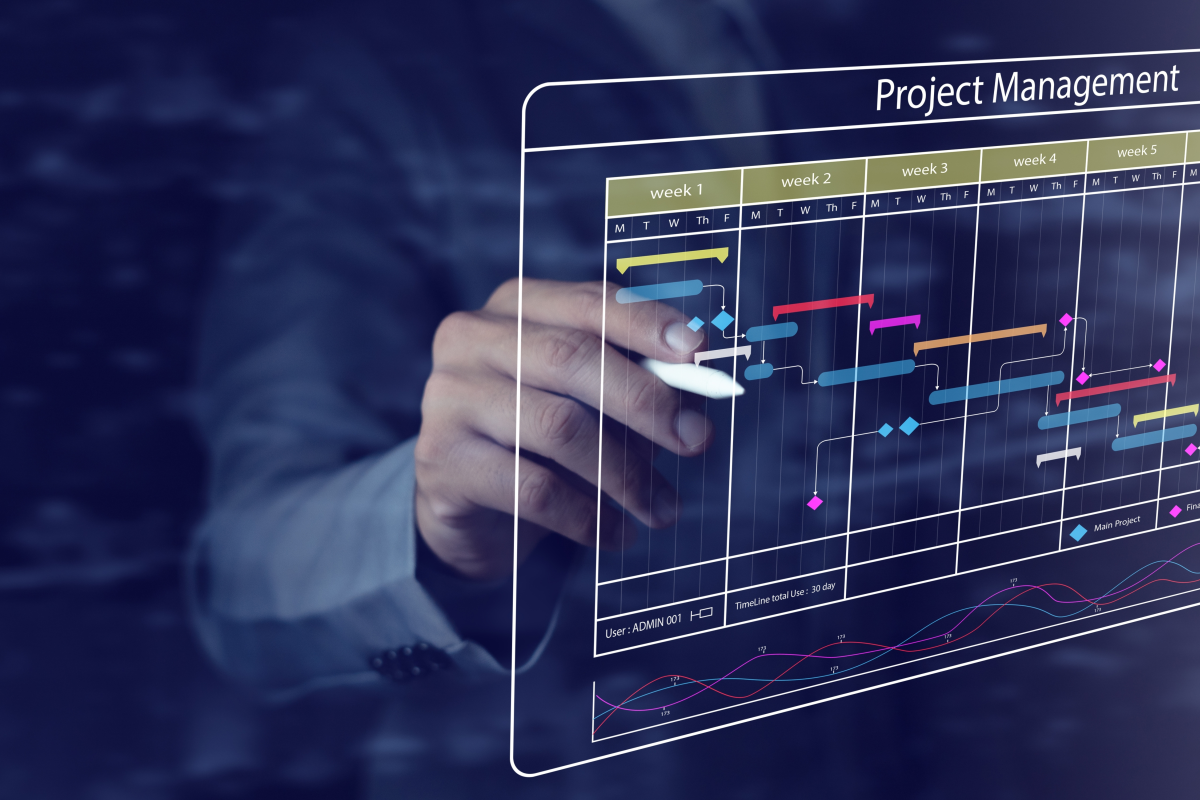
It has been more than 100 years since Henry Laurence Gantt, the engineer who helped build the Hoover Dam, introduced the Gantt chart — still the most widely recognized project management symbol. A century later, pharmaceutical companies are still looking for ways to stay ahead by consistently delivering projects faster, cheaper, and better than the year before.
In the past decade of economic instability, financing startup med-techs or pharmaceutical drugs has not gotten easier. Investors want clear paths and defined exit points. What does success look like? When is the next investment cycle? What are the early warning signs of failure? What is the minimum set of requirements for a product release? These questions must be agreed upfront with any investment board.
Solid project, program, and portfolio management practices still drive initial investment. The ability to report progress through measurable work packages remains the foundation for continued reinvestment. The basics still matter: agree the portfolio roadmap upfront; identify programs of work; determine the critical path; describe the development process; include budget monitoring and expenditure profiling in every review; and report consistently on major risks and issues.
One observable trend is the growing number of chartered accountants now serving as CIOs or portfolio managers. Projects are more about the bottom line than ever before. Think about your project as if it were your own money. Provide investors with dashboards that build the trust to sustain an investing culture.
(Learn how Strategic Portfolio Management by Cora allows organizations to select and manage a strategically aligned set of project initiatives, delivering maximum business value through the right investment decisions.)
4. How pharmaceutical organizations are moving project management to the cloud
Mobile collaboration is now a deciding factor when pharmaceutical organizations choose project management software. It has become a key reason enterprises move project management applications from behind the firewall to third-party cloud solutions. Mobile devices broadcast project status to the entire team, display schedules and tasks for wider discussion, and give all project stakeholders — using laptops, tablets, and smartphones — access to corporate resources anytime, anywhere.
The project manager's role is to manage the technology, policy, security, and regulatory factors that support the project team. Developing data ownership policies may require input from legal, information security, and management teams. Project managers are now responsible for access rights across all project information — a tool with granular access controls can be a deciding factor.
Agile practices and self-directed teams have driven demand for visual representations of project management data across all team members. Embedding regulations or guidelines directly in the project management tool keeps team members focused on the standards they must follow.
Enterprise mobility needs to be embraced by delivery organizations. Project managers can no longer operate in isolation inside the PMO. Project team members need to understand project scheduling. Providing collaborative access anytime and anywhere is a trend any serious life sciences project management transformation program should address.
5. APLs and integrations improve the project management experience for pharma teams
Customizability sits at the center of enterprise project management software. The level of detail in project reports varies greatly depending on the audience. Traditionally, project management reporting followed strict "Chinese whisper" protocols — you reported to your boss, who reported to theirs, and so on. That siloed reporting model is largely gone from modern pharma organizations.
The information a CIO needs on technical progress is fundamentally different from the budgetary data a CFO requires. The data lives in different tools; the layouts are different; the formats vary. Junior project managers can spend significant time compiling next week's report immediately after this week's status meeting. The solution: invest in a project management system that pulls data from multiple sources into customizable reports. (Once again, investors want to see project progress and expenditure profiling — "he who pays the piper calls the tune.")
As pharmaceutical companies seek to integrate their CRM and PM platforms, open API functionality is fast becoming an industry standard rather than a premium feature. CRM and project management integration bridges the gap between finance and operations by exchanging data between systems. Open APIs provide transparency and build trust across teams — even between finance and engineering.
6.Project managers now lead organizational change in pharma and life science
For every technology introduction, organizational change is the one constant — and technology companies sometimes forget to mention it. To maintain steady growth, pharmaceutical companies and med-tech firms in the global life sciences industry must adapt to dynamic pharmaceutical change. Mergers, acquisitions, and new non-vertical partnerships are commonplace. The question worth asking: how can project managers get more involved in organizational change pharma and life sciences programs?
Elevating organizational change management in the pharmaceutical industry
Historically, the project manager's task was to drive deliverables and keep focused on product delivery. The change manager handled making change management happen across the organization — managing change projects, risk assessment, tracking KPIs, and overseeing team communication. The overlap between these two roles is obvious, and the direction is clear: executives increasingly want project managers engaged in all change initiatives.
It makes sense. Project managers work closely with all team members, bridge communication gaps, and drive training initiatives across the commercial and operational sides of the business. They are closest to the heartbeat of the organization. Their focus must shift from what the transformation program is delivering to why it was initiated. They must also work to change culture and employee attitudes — far easier said than done, particularly when organizational change is passively resisted or actively rejected.
For pharma companies running large commercial transformation efforts, the transformation office role has expanded. Project managers should manage the mechanics of change management projects. They must become part of the change story — early adopters whose inputs are actively sought, and whose project reports include a dedicated section on how the change initiative is progressing. Build it into yearly objectives. Recognize their successes. Hold them accountable to drive pharmaceutical change not just within their teams, but across the entire organization.
Read how Cora's Life Sciences project management software supports organizational change across pharma and life sciences organizations.
Frequently asked questions about organizational change pharma and life sciences
What is organizational change management in pharma and life sciences?
Organizational change management in pharma refers to the structured methods pharmaceutical companies and life sciences organizations use to guide people through transformation programs — from new technology adoption to commercial restructuring. It covers communication, training, stakeholder engagement, and performance monitoring to achieve lasting change.
Why do pharma companies struggle with organizational change?
Pharmaceutical companies operate in heavily regulated settings where process changes require documented approval and validation. This creates friction with the speed at which commercial transformation and technology adoption need to happen. Cultural resistance, siloed teams, and insufficient training are the most common barriers pharma organizations report.
How does agile project management support change management in the life sciences industry?
Agile frameworks give pharmaceutical companies a structured way to manage change in incremental, validated steps. By running short sprint cycles, pharma teams can test new processes, gather feedback from patient-facing or commercial stakeholders, and adjust before full-scale rollout — reducing the risk of large transformation failure.
What role does a transformation office play in pharmaceutical change programs?
A transformation office coordinates organizational change across the pharmaceutical company, aligning the PMO, commercial teams, and functional leads behind a shared transformation program. It monitors adoption rates, manages training delivery, tracks KPIs, and reports progress to executive stakeholders. In pharma, it also manages the regulatory implications of process changes.
What project management software features support organizational change in life sciences?
The most effective platforms give transformation office leaders real-time dashboards, resource planning integrated with HR data, configurable reporting for different stakeholder groups, and embedded regulatory guidelines. Managing a full transformation program — from portfolio-level strategy down to individual project tasks — within one platform significantly improves change adoption rates for pharma companies.
See Cora in Action: request a demo
Managing organizational change in pharma and life sciences is hard. It takes the right methodology, the right team — and the right platform.
Cora's project portfolio management software gives PMO leaders in the pharmaceutical industry a single platform to plan, execute, and track every project in a transformation program. From managing distributed teams and investor-ready dashboards to enforcing regulatory compliance and driving commercial transformation, Cora is built for the complexity life sciences industry organizations face.
Request a demo to see how Cora supports the organizational change pharma and life sciences teams are managing today.
Find out more
Learn how Cora's Life Sciences Project Management Software supports organizations across the life sciences industry.
This topic is also explored in more detail in a complimentary guidebook, which can be accessed below.
Related Insights



:format(webp))
:format(webp))
:format(webp))
:format(webp))
:format(webp))

:format(webp))