
The life sciences sector enters 2026 under growing pressure — to innovate faster, operate more efficiently, and deliver increasingly complex therapies at scale. For pharma, biopharma, biotech, and medtech organizations, increased competitive pressure is forcing a hard look at how work actually gets done. The life sciences trends shaping this year reflect a significant transformation in priorities: from talent and data infrastructure to AI adoption, cell therapy scale, and regulatory governance.
Scientific ambition remains high, but execution is where organizations are being tested. Talent shortages, data fragmentation, rising regulatory demands, and the shift from experimental technologies to enterprise-wide adoption are changing how programs get delivered. Success depends not just on breakthrough science, but on the operational foundations that support it.
Key Takeaways
Execution is the true differentiator. Scientific innovation remains strong, but organizations that succeed will be those that can reliably execute across complex, global portfolios under increasing pressure.
Talent constraints are structural, not temporary. Workforce shortages in critical roles will persist, making visibility into capacity, skills, and priorities essential to sustaining progress.
Data quality and connectivity matter more than volume. Fragmented systems limit the value of digital investment; clean, connected, and accessible data is now a competitive asset.
AI advantage depends on operational readiness. Moving from pilots to impact requires clear use cases, strong governance, and data foundations that support repeatable execution.
Advanced therapies demand operational scale. As cell and gene therapy pipelines expand and regulatory demands rise, organizations need technology that keeps pace with both.
Increased demand strains life sciences workforce and capacity planning
The life sciences industry faces a structural workforce problem. Demand for skilled workers across research, clinical operations, regulatory affairs, and advanced technologies is climbing, but the available workforce is not keeping pace. In the UK alone, one industry forecast suggests the sector will need as many as 145,000 new and replacement workers by 2035 to sustain growth and innovation [1]. Across Europe and the U.S., thousands of job postings remain unfilled, particularly in specialised roles like clinical research, data science, and biomanufacturing where skill requirements have rapidly evolved [2].
Broad industry reports show employment in life science can fluctuate — with job growth in some regions and segments, and slowdowns or layoffs in others [3]. Many organizations are struggling to recruit for capabilities tied to digital transformation and modern therapeutic platforms, creating a mismatch between what the market needs and who is available to do the work [4]. As AI, data analytics, and advanced biologics become standard tools, securing the right people — and keeping them — will be one of the most defining operational challenges for 2026.
Data innovation and digital development as a competitive differentiator
Life sciences organizations are generating more data than ever — but having data is not the same as using it well. Big data volumes from clinical trials, manufacturing systems, and real-world evidence programs are growing faster than most teams can manage. Industry research shows that more than 80% of life sciences executives believe data and digital technologies will be critical to future success [5], yet many companies still struggle with fragmented systems and inconsistent data standards.
Digital infrastructure has become a strategic asset — not simply a support function. According to a recent Deloitte industry benchmark, companies with mature digital capabilities are more likely to hit key development milestones on time, compared with peers relying on legacy software and manual tools. As data volume and velocity continue to grow, the ability to access clean, connected data will separate leaders from laggards in 2026.
Machine learning drives the shift form experimentation to execution
AI in life science has moved past the proof-of-concept stage. From drug discovery and patient stratification to manufacturing quality checks and supply planning, machine learning is being embedded into real processes. Beyond analytics, it is being applied to lab automation, gene editing workflows, and personalized medicine programs — areas where faster iteration directly affects outcomes. 68% of US life sciences organizations say AI is fundamentally reshaping their business [6].
There is still a clear gap between ambition and execution. Many companies struggle to operationalise AI because of limited data readiness, unclear use case prioritisation, and lack of cross-functional governance. Organizations that can bridge this gap — turning AI from isolated pilots into repeatable, measurable workflows — will have an operational edge in discovery, development, and delivery.
Machine learning drives the shift form experimentation to execution
AI in life science has moved past the proof-of-concept stage. From drug discovery and patient stratification to manufacturing quality checks and supply planning, machine learning is being embedded into real processes. Beyond analytics, it is being applied to lab automation, gene editing workflows, and personalized medicine programs — areas where faster iteration directly affects outcomes. 68% of US life sciences organizations say AI is fundamentally reshaping their business [6].
There is still a clear gap between ambition and execution. Many companies struggle to operationalise AI because of limited data readiness, unclear use case prioritisation, and lack of cross-functional governance. Organizations that can bridge this gap — turning AI from isolated pilots into repeatable, measurable workflows — will have an operational edge in discovery, development, and delivery.
Cell therapies scale across pharma and biopharma pipelines
Cell therapies and gene editing treatments are moving beyond niche use cases and becoming a core part of many life sciences pipelines. More than 30 therapies have already been approved by the FDA, with many more advancing through late-stage trials across oncology, rare disease, and autoimmune conditions. Patent cliffs are also accelerating activity in biosimilars and generics, creating parallel development streams that add pressure to pharma and biopharma organizations managing multiple drug programs simultaneously.
Cell therapy and advanced biologics rely on complex manufacturing models, strict chain-of-custody requirements, and close coordination across clinical, regulatory, and supply teams. Global investment in this space reached $15.2 billion in 2024, even amid broader market uncertainty [7].
As more organizations move from single-asset programs to full therapy portfolios, the challenge shifts from scientific feasibility to operational scale. Companies preparing for 2026 are focusing on how to manage parallel development timelines, regulatory milestones, and manufacturing readiness without slowing progress or increasing risk.
Decentralised trials advance patient health and data collection
Clinical trials are becoming more flexible as organizations look for better ways to reach patients and gather data. Decentralised and hybrid trial models reduce reliance on physical sites by combining remote monitoring, digital tools, and at-home participation. This approach helps companies improve recruitment and retention, particularly for studies involving rare diseases or hard-to-reach populations.
Wearable devices are playing a growing role in this shift. Digital biomarkers — measurable physiological signals captured continuously through sensors — are poised to become standard data inputs in decentralised trial protocols. Organizations are now exploring how to integrate these streams alongside traditional clinical endpoints. The global wearable medical device market is projected to exceed $168 billion by 2030, driven by adoption in clinical research and remote patient health monitoring [8].
As these approaches expand, organizations are focusing on how to manage higher data volumes, maintain data quality, and meet regulatory expectations — all while keeping trials simple for patients to participate in.
Environmental pressures and regulatory growth demand governance-first technology
Governance and compliance pressures continue to rise across life sciences, driven by tighter regulations, faster innovation cycles, and more global operating models. Environmental, social, and governance (ESG) requirements are adding another layer of oversight alongside clinical and manufacturing compliance. In Deloitte's 2025 Life Sciences Executive Outlook, over half of non-US executives cited regulatory change as a key factor shaping strategy, reflecting how policy considerations are influencing investment and execution decisions heading into 2026 [9].
Attention is shifting toward whether technology is actually used as intended. After years of complex rollouts that delivered limited value, life sciences leaders are prioritising tools that support consistent processes, clear accountability, and everyday adoption across teams. Industry research shows that nearly 70% of digital transformations fail to meet expectations, often due to poor user adoption rather than technical gaps.
As governance demands grow, organizations are looking for technology that supports structured oversight without slowing teams down. Adoption-first approaches — focused on clarity, usability, and alignment with how people work — are becoming just as important as compliance itself.
How project portfolio management software is helping life sciences organizations
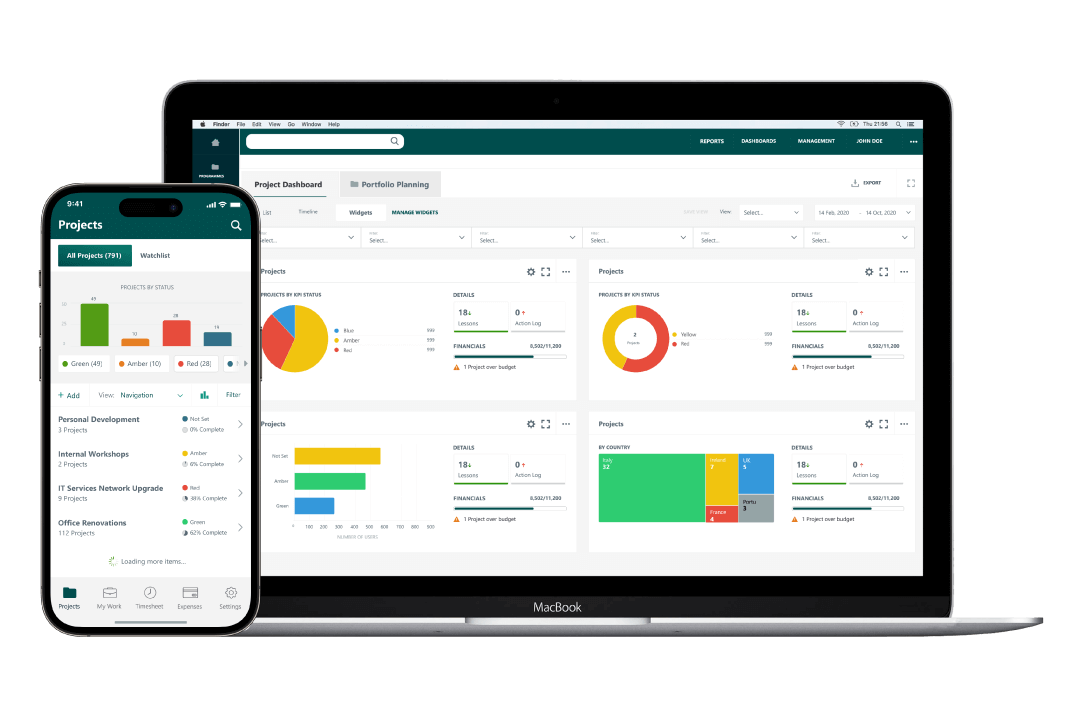
Life sciences companies are increasingly adopting PPM platforms like Cora to align strategy, execution, and governance across the product lifecycle. By replacing siloed tools with a single operational platform, organizations gain the visibility and control needed to deliver complex portfolios.
Supporting innovation across biotech, medtech, and agricultural science
Cora supports organizations across the full life sciences spectrum — from biotech and biopharma to medtech and agricultural science. As these sectors manage intersecting timelines, regulatory milestones, and portfolio complexity, a single operational platform replaces fragmented tools with consistent oversight and real-time decision-making.
Workforce optimization under talent constraints
Cora provides real-time visibility into resource capacity, demand, and skills, allowing leaders to prioritise critical programs and prevent over-allocation. Scenario-based resourcing replaces spreadsheets, helping organizations deploy scarce expertise where it delivers the greatest impact.
A single source of truth for data-driven decisions
Cora centralises plans, budgets, risks, milestones, and outcomes across R&D and clinical portfolios. Executives gain portfolio-level oversight, while teams retain detailed asset and trial-level visibility — enabling faster, more confident decision-making.
AI-ready data foundations for scaled execution
Cora creates a structured, AI-ready data foundation by connecting clean project, cost, resource, risk, and schedule data in one platform. This enables advanced analytics, predictive insights, and AI-driven planning while maintaining governance, consistency, and control.
Managing complex, data-intensive programs at scale
Cora supports coordination across advanced therapies and decentralised trials through integrated schedules, milestone tracking, and dependency management. By linking timelines, vendors, risks, and deliverables, organizations maintain oversight, anticipate bottlenecks, and scale portfolios without compromising compliance or speed.
Built-in governance with an adoption-first approach
Cora embeds audit-ready governance directly into daily execution with time-stamped changes and centralised documentation. Clear workflows and role-based views drive adoption, so compliance requirements are met without slowing teams down.
See Cora in action for your life sciences portfolio
The six life sciences trends covered in this guide share a common thread: organizations that build stronger operational foundations will move faster, adapt better, and deliver more. Whether you manage drug development pipelines, call therapy programs, or multi-site clinical portfolios, Cora gives your teams the visibility and control to execute at scale.
Cora's Project Portfolio Management Software - Transform PPM Operations. is built for the complexity of life science — connecting plans, resources, budgets, and risks in one place so your organization can focus on what matters: getting therapies to patients.
Request a Demo | Cora Systems PPM Software for Smarter Project Delivery to see how Cora helps life sciences organizations plan, execute, and govern complex portfolios.
About the Author
This guidebook was reviewed by Richard Fitzpatrick, Content Editor at Cora Systems.
References
1. BioIndustry Association – Skills and workforce forecast for the UK life sciences sector
2. DatoCMS – Life sciences hiring and skills trends
3. U.S. Life Sciences Talent Trends 2025 | CBRE
4. Recruitment Challenges facing Life Sciences Industry Execs in 2025 | CSG Talent
5. whitepaper_healthlifesciences-apr24.pdf
6. Cell and Gene Therapy Sector Sees 30% Investment Surge Despite Market Challenges - BioSpace
7. Wearable Medical Devices Market Size | Industry Report 2030