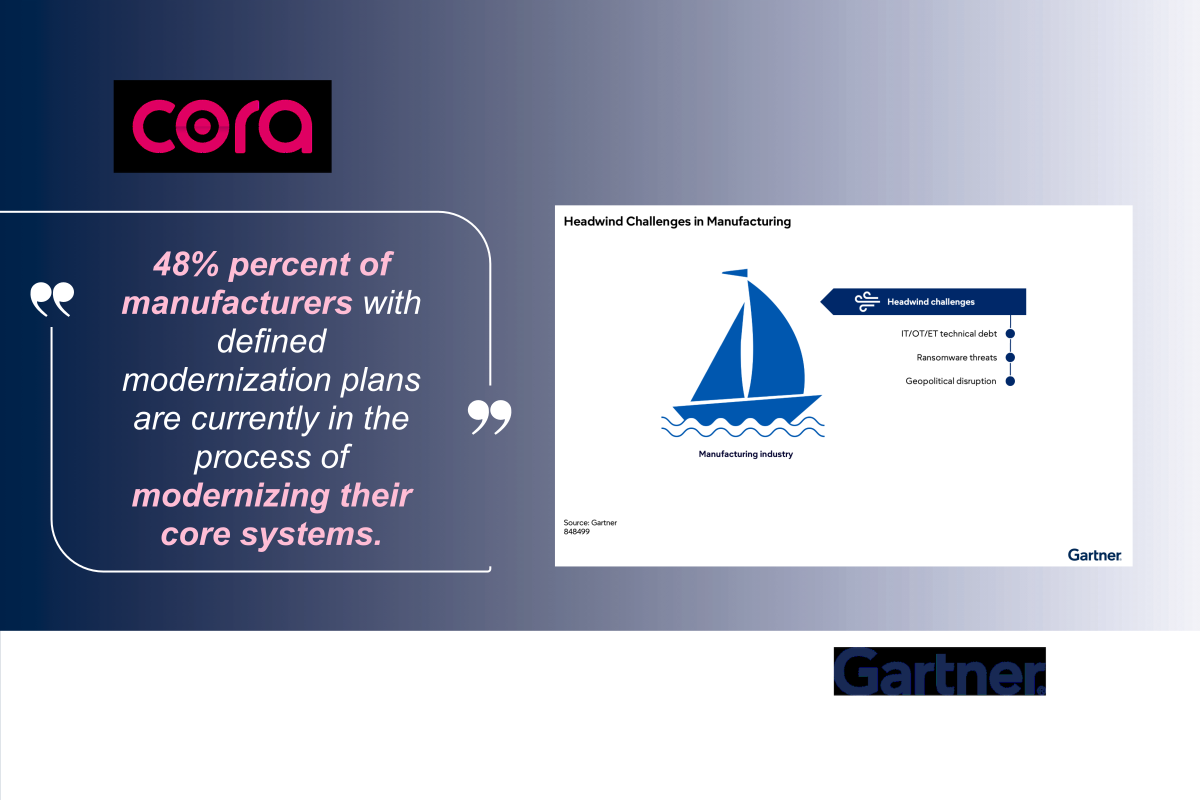
Compounded Technical Debt Stalls AI Progress in Manufacturing
"Technical debt describes the future liabilities that are created when a system deviates from any of its nonfunctional requirements."
-Gartner Top Trends Manufacturing 2026 Report
As companies aggressively pursue embedding AI into their operations, they are impeded by site-level technical debt that has accumulated through nonstandard systems and/or integrations, customizations or physical assets that continue to operate past their estimated depreciation end dates.
Rapid digital transformation is accelerating technical debt across IT and operational technology environments. Many manufacturers are modernizing systems to reduce costs, improve security and adopt new technologies, but legacy platforms and disconnected systems remain widespread. Mergers, siloed applications and integration complexity create inefficient architectures that slow innovation and make modernization projects more expensive and difficult.
Poor technical debt management will impede factory modernization and scalability. According to the 2024 Gartner I&O Signature Role Survey,
"54% of I&O leaders from manufacturing organizations said the rapid pace of technical debt accumulation due to digital transformation was one of the top challenges to reducing technical debt. Another 48% face high costs and risks due to critical technology dependencies"
-Gartner Top Trends Manufacturing 2026 Report
Organizations should prioritize technical debt by assessing business value, risk, maintainability and security impacts. Technical debt reduction should be embedded into annual objectives and linked to measurable business outcomes. Manufacturers should also frame technical debt as a barrier to AI adoption, innovation and operational resilience, while highlighting the significant cybersecurity and infrastructure risks associated with outdated systems.
Ransomware Attacks Escalate to Targeted Campaigns
Manufacturing remains the world’s most targeted industry for ransomware attacks.
"Reports indicate a year-over-year surge in attacks ranging from 56% to 61% between 2024 and 2025."
-Gartner Top Trends Manufacturing 2026 Report
The landscape has shifted from “spray-and-pray” attacks to targeted extortion campaigns where attackers not only encrypt production lines but also exfiltrate sensitive intellectual property (IP) and threaten to leak it, forcing manufacturers to pay even if they can restore operations from backups. Attackers increasingly bypass traditional IT perimeters by exploiting vulnerabilities in the supply chain and CPS environments (OT/ICS/SCADA/IIoT/ET).
Manufacturers are attractive targets because downtime directly impacts production, revenue and customer commitments. Industry 4.0 initiatives have connected legacy equipment to enterprise systems and the internet, creating vulnerable attack surfaces with weak security controls. Dependence on third-party suppliers also increases risk, as attackers exploit trusted vendor relationships to gain access to factory environments.
The financial and operational consequences of ransomware are severe. Recovery costs often exceed ransom payments, with outages lasting weeks and causing contract losses, reputational damage and supply chain disruption. Manufacturers also face growing regulatory pressure from disclosure requirements and rising cyber insurance costs, while stolen designs or proprietary formulas can permanently damage competitive advantage.
Organizations should strengthen cybersecurity by prioritizing OT asset discovery, vulnerability patching and strict network segmentation between IT and plant systems. Manufacturers should deploy immutable backups, secure remote access and regular incident response drills involving operations teams. Isolating supplier connections and monitoring third-party access can further reduce the risk of ransomware spreading into critical production environments.