


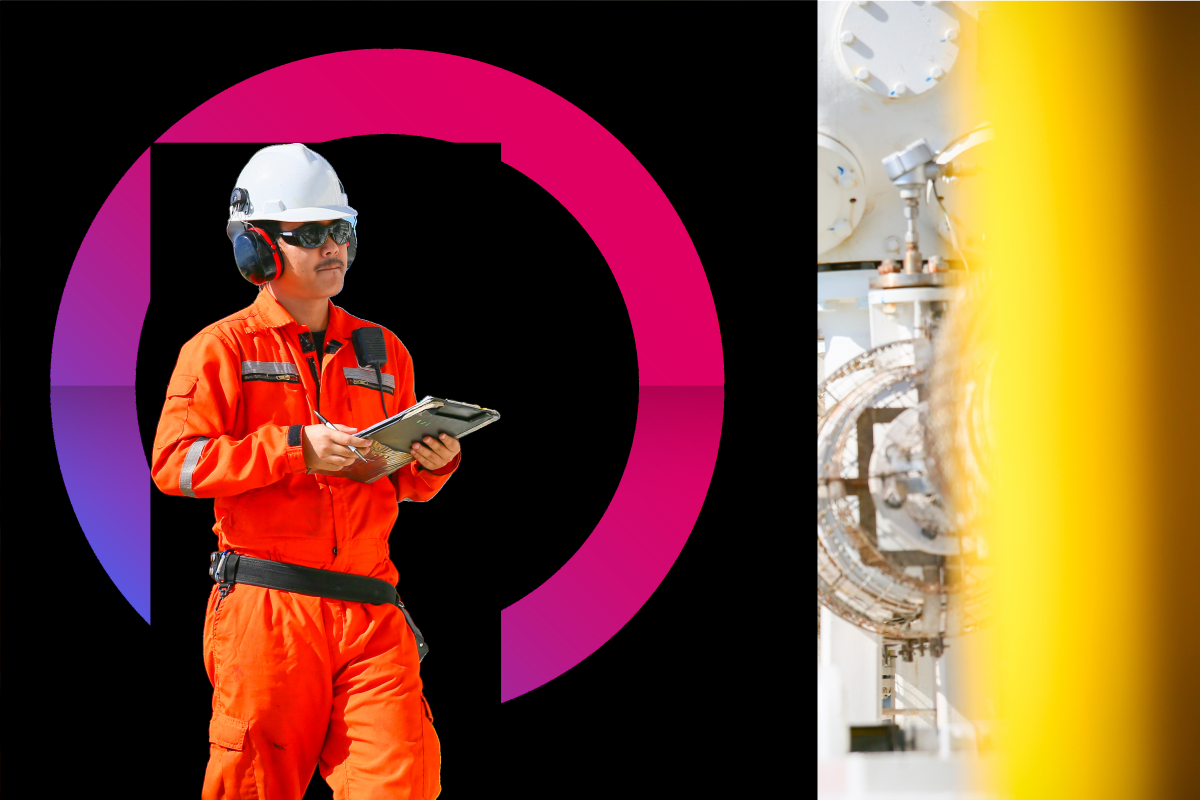
Managing an oil and gas project is nothing like managing a software rollout or a commercial construction build. The technical complexity is deeper, the safety stakes are higher, and the cost of a missed decision, on engineering, on risk, on land rights, runs into millions. Project managers in the petroleum sector carry responsibilities that span regulatory compliance, mineral ownership, workforce safety, and multi-year capital programs, often simultaneously.
What separates the managers who consistently deliver from those who don't comes down to a defined set of competencies. They combine technical depth with business judgment, and situational awareness with strategic thinking. This article breaks down those essential skills and shows how structured project portfolio management software helps petroleum project managers operate at the level the industry demands.
Key takeaways
Risk management is the single most critical competency. Oil and gas projects carry unique technical, regulatory, and safety risks that demand structured processes at every phase.
Engineering knowledge is non-negotiable. Project managers must have deep enough expertise to interrogate technical teams and catch problems before they compound.
Safety culture development protects both people and programs. A strong culture and safety mindset limit incidents, reduce regulatory exposure, and keep projects on schedule.
Critical thinking separates reactive managers from strategic ones. Interpreting data, challenging assumptions, and making decisions under pressure define who the industry promotes.
Communication strategies determine whether a project team moves as one. Clear, consistent communication across disciplines and stakeholders holds complex oil and gas programs together.
Oil and Gas Project Management demands a different skill set.
The oil and gas industry runs on precision. A missed weld specification, a delayed permit on a land issue, or a miscalculated pressure test can cascade into delays worth tens of millions. Project managers here don't just coordinate tasks; they make technical and commercial decisions with real consequences.
That's why the role requires comprehensive knowledge across engineering, regulatory frameworks, and business operations. Managers who come from purely administrative backgrounds often struggle to earn credibility with technical crews. The best oil and gas project managers have spent enough time in engineering disciplines or in the field to know exactly what they don't know.
Risk Management is the foundation of every gas project
No skill matters more than understanding risk management processes. Every phase of an oil and gas project, from exploration and land acquisition through production and decommissioning, carries distinct risk profiles: geological uncertainty, equipment failure, regulatory change, contractor performance, and environmental exposure.
Effective risk management in the petroleum industry means identifying risks early, not just at gate reviews. It means quantifying probability and impact with data. It means assigning clear ownership for each mitigation action and tracking risk status in real time.
Risk Management practices that reduce project exposure
Map risks to specific work packages, not just to the overall program
Use quantitative analysis, Monte Carlo simulations, and sensitivity analysis on critical areas where schedule or cost uncertainty is high
Build escalation triggers so emerging risks reach senior managers before they become active issues
Review risk registers at every progress meeting, not just at formal milestones
Cora's risk management capabilities enable project managers to build structured risk registers, link risks to work packages, and automatically escalate critical areas, so nothing slips on a complex petroleum program.
Engineering knowledge gives project managers their technical authority
A project manager who can't read a P&ID, evaluate a drilling schedule, or challenge a fabrication cost estimate will always be one step behind their engineering teams. The answer isn't to turn every manager into an engineer; it's to build enough technical literacy to ask the right questions and spot when answers don't add up.
Managers with sufficient expertise to challenge assumptions consistently outperform those who rely entirely on specialist input. In the oil and gas industry, technical credibility is currency. Without it, managers struggle to influence contractors, engage regulators, and earn the confidence of operations personnel.
Organizations that invest in targeted training course for project managers and programs that build technical fluency alongside delivery skills see measurable improvements in project outcomes across oil, gas, and petroleum capital programs.
Safety Culture development protects people and programs
Safety in the oil and gas industry is an operational imperative, not a compliance checkbox. The most technically competent project manager will still underperform if they can't build and sustain a genuine culture and safety mindset across their team.
Safety culture development means making safety visible, in pre-job briefings, in progress reviews, and in how near-misses get reported and actioned. Petroleum project managers who treat safety as a personal leadership responsibility, rather than an HSE department function, run safer projects and attract fewer regulatory interventions.
Three behaviours that define safety safety leaders in oil and gas
They walk job sites and ask safety questions, not just progress questions
They recognize near-miss reporting and treat it as a leading indicator, not just zero-incident milestones
They escalate safety concerns before incidents occur, even under schedule and cost pressure
Critical thinking turns data into decisions
Oil and gas project managers sit at the intersection of enormous volumes of data: cost reports, schedule updates, engineering queries, vendor performance metrics, and environmental monitoring outputs. The ability to cut through noise and identify what matters is one of the seven essential project management skills that consistently separates high performers.
Critical thinking here means interrogating data rather than accepting it at face value. It means asking why a cost variance appeared, not just recording it. It means tracking schedule trends over time rather than reading the latest snapshot in isolation.
Cora's portfolio dashboards surface performance data in context, enabling project managers to spot patterns and intervene before small problems compound into program-level issues. The platform turns raw project data into insights that support genuine critical thinking at pace.
Communication strategies hold complex oil and gas programs together
An oil and gas program typically involves engineering contractors, procurement teams, regulatory liaison, land professionals managing mineral ownership disputes, operations personnel, and C-suite stakeholders, each with different information needs and different definitions of "on track."
Project managers who build clear communication strategies, defining what gets reported, to whom, at what cadence, and in what format, create alignment that generic status emails never achieve. This is also the foundation of sustained leadership development: managers who communicate with precision attract better talent, build more trusted teams, and spend far less time managing conflicts that stem from misaligned expectations.
For PMO leaders who want to see how structured reporting changes delivery culture, this guide to PMO maturity covers the key stages and what separates high-performing project organizations from the rest.
See how Cora supports oil and gas project managers
The skills covered here, risk management, engineering literacy, safety culture development, critical thinking, and communication, are the foundation. But even the most skilled project managers need the right platform to operate at scale across a complex petroleum portfolio.
Cora is purpose-built for organizations running demanding capital and operational programs in the energy and petroleum sector. From real-time risk tracking and portfolio-level dashboards to structured reporting that provides executives with the visibility they need, Cora offers project managers and PMO leaders a platform that matches the complexity of their programs.
:format(webp))
:format(webp))
:format(webp))
:format(webp))
:format(webp))
:format(webp))
:format(webp))