Technology implementations fail at alarming rates—not because of the technology itself, but because organizations underestimate the human element. When deploying new Project Portfolio Management (PPM) systems, the difference between success and failure often hinges on how effectively you manage change across your organization.
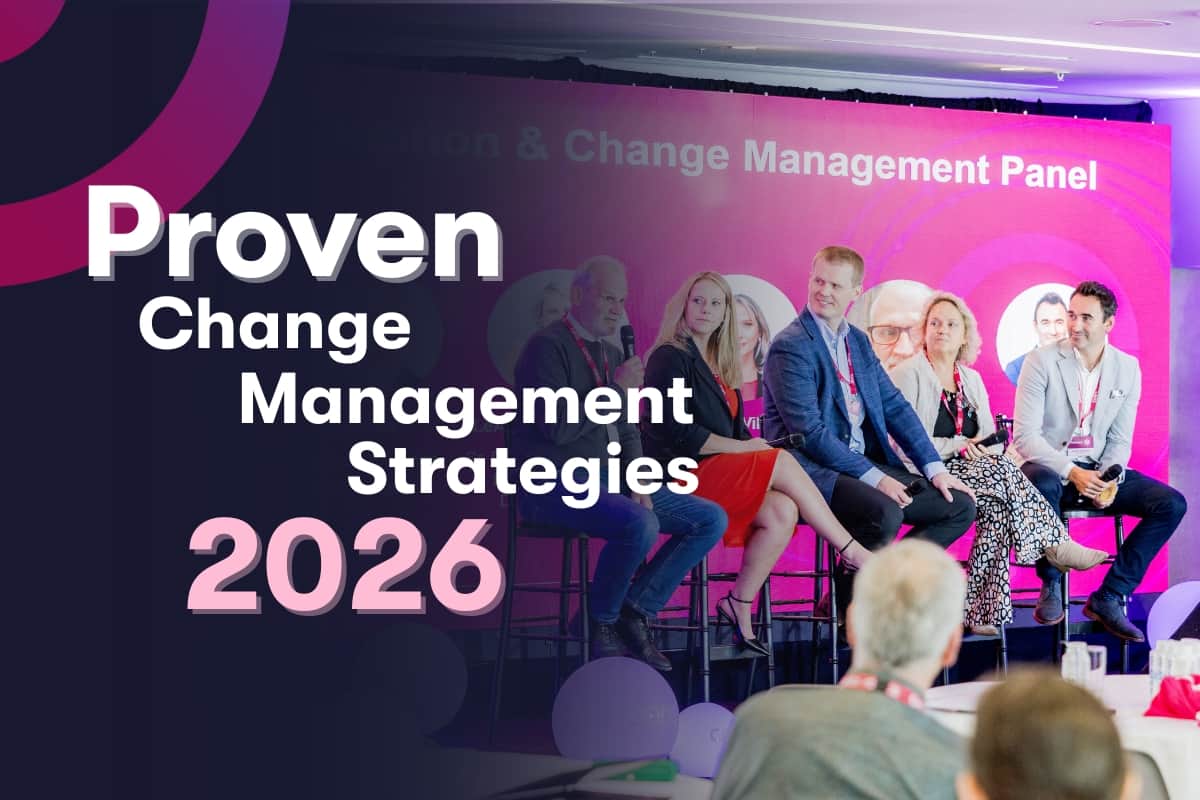
Industry leaders from Honeywell, Dawn Foods, National Trust, and Hilton Food Group recently shared their hard-won wisdom on navigating complex transformations. Their collective decades of experience reveal what actually works when implementing strategic portfolio management solutions, such as Cora.
Key Takeaways
1. Planning drives implementation success: Organizations that invest time in detailed planning before launching their PPM systems achieve significantly better adoption rates and faster time-to-value.
2. Communication cannot be overcommunicated: The most successful implementations maintain constant, multi-channel communication with stakeholders at every level—from executives to end users.
3. Executive sponsorship is non-negotiable: Without visible senior management support and accountability, even the best-planned initiatives struggle to gain organizational buy-in.
4. Quick wins build unstoppable momentum: Breaking large implementations into smaller, achievable milestones creates confidence and demonstrates value early in the transformation journey.
5. Resistance is data, not opposition: When users push back, they're often revealing genuine concerns about processes, workloads, or change impacts that need to be addressed.
Understanding Change Management Strategies for Modern Organizations
Change management has evolved from a soft skill to a hard requirement for implementation success. Erik Selman, VP of Project Solutions at Honeywell, puts it bluntly: "The technology is the easy part." After eight years of implementing systems across jet engines, industrial controls, and warehouse automation divisions, he has learned that the real challenge lies in getting people to adopt new ways of working.
Organizations implementing strategic portfolio management systems face unique challenges. These platforms touch every aspect of how companies prioritize work, allocate resources, and track performance. When Dawn Foods, a 26-year veteran of operational excellence, decided to implement its PPM solution, it knew the technical aspects would be straightforward. The more complex question was how to shift mindsets across manufacturing facilities spanning North America and Europe.
"You have to meet people where they are," explains LeAnn Clements, Senior Director of Strategy Implementation at Dawn Foods. Her approach recognizes that different stakeholders require distinct messages, varying timing, and varying levels of detail regarding the changes and their rationale.
Building Effective Management Strategies That Drive Adoption
The foundation of successful change begins long before software deployment. Debora Villiers, EPMO Director at Hilton Food Group, learned this lesson during her seven years implementing transformation projects at Jaguar Land Rover.
"People don't resist change—they resist being changed," she notes. "When you involve them early, when you listen to their concerns, when you show them how this makes their lives better, resistance melts away."
Her approach at Hilton leverages a three-phase communication model:
Pre-implementation engagement: Initiate conversations with affected teams several months prior to go-live. Share the vision, explain the "why," and solicit input on processes and workflows.
Active implementation support: Provide hands-on assistance during the transition period. Make sure users know exactly where to go when they need help.
Post-implementation reinforcement: Continue checking in after launch. Celebrate wins, address lingering concerns, and demonstrate how the new system delivers value.
This model works because it recognizes that change isn't a moment—it's a journey. Ian Cook, Senior Project Manager at National Trust, has led Cora implementations in both the NHS and charitable sector organizations. His experience shows that the organizations willing to invest in change management see adoption rates two to three times higher than those that treat it as an afterthought.
Achieving Successful Change Through Strategic Planning
Strategic planning for PPM implementations requires striking a balance between ambition and pragmatism. Organizations often want everything immediately—full functionality across all departments on day one. The reality is that this approach overwhelms users and invites failure.
"We talked about eating the elephant one bite at a time," Erik Selman recalls from the panel discussion. "At Honeywell, we broke our implementation into phases. First, we got the core project tracking working. Then we added resource management. Then, financial integration. Each phase gave us a win, built confidence, and made the next phase easier."
This phased approach serves multiple purposes. It limits risk by keeping the scope manageable. It generates early victories that build organizational momentum. Most crucially, it gives teams time to adapt to new processes before piling on additional complexity.
When Hilton Food Group began its Cora implementation 11 months ago, it created what Debora Villiers calls a "change map"—a visual representation showing which departments would be affected at each stage. "This transparency was huge," she explains. "People could see when their turn was coming. They had time to prepare. They knew we weren't asking them to do everything overnight."
Leading Organizational Change in Complex Environments
Leading change across diverse organizational structures demands different tactics than managing change within a single department. National Trust operates historic properties, conservation programs, and retail operations—each with distinct needs and cultures.
"You can't use the same playbook for everyone," Ian Cook observes. His team developed persona-based communication strategies. Executive updates focused on strategic value and ROI. Project manager communications emphasized improved visibility and resource optimization. End-user messaging highlighted time savings and reduced administrative burden.
This segmentation also extended to training programs. Rather than forcing everyone through identical sessions, the National Trust created role-specific learning paths tailored to each individual's needs. Project managers received in-depth training on advanced features. Contributors got streamlined, task-focused instruction. Executives received executive dashboards and tutorials on reporting.
The results spoke for themselves. "We saw much higher engagement when people felt like the training was designed for them, not just repurposed from some generic deck," Cook reports.
Implementing Change Management Best Practices Across Industries
While industries differ, the principles of effective change management remain remarkably consistent. Whether you're implementing PPM software in defense contracting, food manufacturing, or heritage conservation, certain practices prove universally valuable.
Visible executive accountability: When senior leaders actively use and champion the new system, adoption cascades downward. Dawn Foods saw this firsthand when its operations executives began running weekly portfolio reviews in Cora. "Once people saw that leadership was serious about this, that we were all using the same system, the holdouts came around," LeAnn Clements notes.
Anticipate and address resistance proactively: Rather than treating resistance as an obstacle to be overcome, successful change leaders view it as information to be understood. What are users really worried about? Is it an additional workload? Fear of transparency? Concern about job security? Understanding the root cause allows you to address real problems rather than perceived ones.
Create feedback loops: Debora Villiers emphasizes the value of regular check-ins post-implementation. "We do monthly pulse surveys—nothing elaborate, just three questions. Are you using the system? What's working? What's not? This simple feedback mechanism has been invaluable for catching issues before they become problems."
Celebrate wins publicly: Recognition matters. When teams achieve implementation milestones or demonstrate strong adoption, celebrate those successes visibly by sharing metrics that show improved portfolio visibility or faster project delivery. "People want to be part of something successful," Erik Selman observes. "Show them they are, and they'll lean in harder."
Developing a Comprehensive Change Initiative Framework
Structured frameworks provide the scaffolding that prevents change initiatives from collapsing under their own weight. The panel members shared elements from management models they've found most effective.
Ian Cook draws from his director-level experience at the Health Research Authority:
"In the NHS, we used a modified ADKAR model—Awareness, Desire, Knowledge, Ability, Reinforcement. It gave us a checklist. Have we built awareness of why this matters? Have we created a desire to participate? Have we provided the knowledge and training? Have we given people the ability through good tools and support? Are we reinforcing the new behaviors?"
This framework works because it's diagnostic. When adoption stalls, you can trace backward. Where did we lose people? Was it awareness? Did they understand the 'why' but lack desire? Or did they want to participate but lacked the knowledge or ability?
Honeywell took a complementary approach, layering Prosci methodology over their implementation. "Prosci gave us the people side of change management," Erik explains. "It helped us identify sponsors, build a coalition, and structure communications. The combination of good technology from Cora and good change management from Prosci was powerful."
These management models aren't straitjackets—they're guides. Organizations adapt them to fit their culture, size, and complexity. The key is having some framework rather than making it up as you go.
Promoting Change Through Effective Business Strategy Alignment
Change succeeds when people understand how it connects to business goals they care about. Abstract benefits—such as "better visibility" or "improved governance"—rarely motivate action. Concrete outcomes do.
Dawn Foods tied its Cora implementation directly to business strategy execution. "We weren't implementing a tool," LeAnn Clements clarifies.
"We were implementing our ability to execute strategy. When people understood that connection—that this system would help us deliver the strategic initiatives that would grow the company and secure their jobs—suddenly we had allies instead of skeptics."
This alignment requires discipline. During implementation planning, force yourself to answer: How does this change advance our business strategy? If you can't articulate a clear connection, you either have the wrong plan or the wrong change initiative.
The National Trust linked its PPM implementation to its organizational mission.
"We exist to protect historic places and spaces forever, for everyone," Ian Cook explains. "Better project and portfolio management means we can protect more places, serve more visitors, and do better conservation work. When we framed it that way—as serving our mission more effectively—people got it."
Managing Change Implementation Across Distributed Teams
Distributed organizations face unique challenges in managing change. When your teams span continents, time zones, and cultures, maintaining consistent communication and support becomes exponentially more complicated.
Hilton Food Group operates across the UK and Europe. Debora Villiers developed a "hub and spoke" model for change management. Regional champions served as local points of contact, translating central messaging into a context that was locally relevant.
"Our UK teams had different concerns than our European operations," she notes. "Having local champions who understood both the global strategy and local reality was crucial."
Technology helps bridge geographic divides. Honeywell leveraged recorded training sessions, searchable knowledge bases, and virtual office hours to support global teams.
"You can't be everywhere physically," Erik Selman acknowledges. "But you can be everywhere digitally if you're thoughtful about it."
Dawn Foods adopted a hybrid approach, combining virtual communication with strategic in-person visits to key facilities.
"Sometimes you need face-to-face," LeAnn Clements observes. "Particularly when you're introducing something new and people have concerns. Video calls are great, but nothing replaces showing up and working through issues shoulder-to-shoulder."
Building a Sustainable Change Strategy for Long-Term Success
Short-term adoption doesn't guarantee long-term success. Organizations must build change strategies that extend well beyond go-live dates.
"Six months after implementation, when the excitement fades and the implementation team moves on, that's when things can slide backward," Ian Cook warns.
His solution at the National Trust: embed ongoing support into regular operational rhythms. Monthly user group meetings. Quarterly refresher training. An active internal community where users share tips and ask questions.
These mechanisms serve double duty. They sustain adoption and prevent backsliding. They also identify opportunities for continuous improvement. "Our users are incredibly creative," Cook notes with admiration. "They find ways to use the system we never imagined. Capturing and sharing those innovations benefits everyone."
Hilton Food Group takes a similar approach, appointing "system stewards" in each department. These aren't IT staff or project managers—they're operational team members who are familiar with Cora and help colleagues navigate challenges. "It normalizes asking for help," Debora Villiers explains.
"Instead of people suffering in silence or working around the system, they have someone they trust who can show them the right way."
The Cora platform evolves continuously, introducing new features and capabilities. Organizations that treat their PPM implementation as "done" miss opportunities to leverage these enhancements. Successful organizations incorporate regular "what's new" sessions into their calendars, ensuring users stay current as the platform evolves.
Leveraging Training and Support for Sustained Adoption
Training is often treated as a checkbox exercise—get everyone through a session, mark it as complete, and move on. This approach fails because it doesn't match how adults actually learn, particularly when mastering complex professional tools.
"We did role-based training in waves," Erik Selman explains. "First wave was just enough to get started. The second wave, six weeks later, covered intermediate topics. Third wave, three months out, addressed advanced features. This spaced repetition worked far better than trying to cram everything into week one."
National Trust supplemented formal training with just-in-time learning resources. Short video tutorials addressing specific tasks—"how to update project status," "how to log time," "how to create a report." Users could find what they needed exactly when they needed it, without having to wade through comprehensive documentation.
Peer-to-peer learning proves especially valuable. When Hilton Food Group identified power users in each department, they formalized these relationships.
"These champions became go-to resources for their teams," Villiers notes. "They could answer questions immediately, in context, using language and examples their colleagues related to."
Support must be accessible and responsive. Long wait times for help desk responses or complicated ticket submission processes discourage users from seeking assistance. Dawn Foods established multiple support channels, including email, chat, scheduled office hours, and drop-in sessions. "Different people prefer different channels," Leanne Clements observes. "Meeting them where they are removes barriers to getting help."
Measuring Change Success and Gathering Actionable Insights
What gets measured gets managed. Organizations that track change adoption metrics can intervene early when problems emerge and reinforce what's working.
Login frequency: Are people actually using the system regularly? Declining login rates signal disengagement that needs to be addressed.
Feature Utilization: Which Capabilities Are Users Adopting? Which are they ignoring? This data reveals training gaps or features that need simplification.
Time-to-task completion: Are workflows getting faster as users gain proficiency? If not, processes may need refinement.
Support ticket volume and type: What are users struggling with? Patterns in support requests highlight opportunities for better training or system configuration.
User satisfaction scores: Regular pulse surveys provide qualitative feedback that complements quantitative metrics.
"Data tells you where to focus," Ian Cook emphasizes. "We saw that project managers were using Cora heavily, but contributors were logging in less frequently. That told us we needed better training and clearer value messaging for that audience specifically."
These insights feed continuous improvement cycles. Organizations adjust training, refine processes, enhance support, and iterate toward better adoption. "You're never done with change management," Debora Villiers reflects.
"It's not a project with an end date. It's an ongoing commitment to helping your organization get maximum value from your investment."
Creating a Culture That Embraces Transformation
Beyond tactics and frameworks, sustainable change requires cultural evolution. Organizations must shift from viewing change as a disruption to viewing it as an opportunity.
"The companies that struggle most are the ones where change is always painful, always a battle," Erik Selman observes from his cross-divisional perspective at Honeywell. "The companies that thrive treat change as normal. They've built cultures where learning new tools and adapting processes is just what we do."
This cultural foundation doesn't emerge overnight. It's built through repeated positive experiences with change. Each successful implementation builds organizational confidence. Each time leaders demonstrate that they'll support teams through transitions, trust deepens. Each celebration of quick wins reinforces that change creates value.
Leadership plays an outsized role in shaping this culture. When executives speak enthusiastically about organizational evolution rather than grudgingly about necessary disruption, teams take notice. When managers protect their teams from change fatigue rather than piling on initiative after initiative, people have the capacity to engage meaningfully.
Dawn Foods has deliberately cultivated this culture over the course of LeAnn Clements' 26-year tenure.
"We talk about continuous improvement constantly," she explains. "Getting better is part of our identity. So when we implement something like Cora, it's not some alien thing being forced on people. It's another step in our journey of getting better at what we do."
The Strategic Partnership Advantage: Choosing the Right PPM Vendor
Technology vendors fall into two categories: those who provide software and disappear, and those who partner for long-term success. The difference matters enormously for change management outcomes.
"I've had vendors walk away as soon as the contract was signed," Debora Villiers recounts from experience with previous implementations. "With Cora, the engagement and connection have been completely different. They're invested in our success, not just our purchase order."
This partnership manifests in multiple ways. Responsive customer support that actually solves problems. Regular product enhancements driven by customer feedback. Implementation consultants who bring industry expertise, not just technical knowledge. Executive engagement that extends beyond the sales cycle.
Ian Cook emphasizes the value of vendor challenge:
"The best thing Cora does is continually ask us why we're doing something a particular way. They'll say, 'Have you thought about this approach?' or 'Here's how another organization solved that problem.' That outside perspective is invaluable."
The panel members couldn't fault Cora's customer service, engagement, and connection to their implementations. This partnership approach reduces implementation risk, accelerates adoption, and improves long-term outcomes. When selecting a PPM vendor, evaluate not just the technology but the relationship you'll have as you manage change across your organization.
Conclusion
Change management separates successful PPM implementations from expensive failures. Organizations that invest in planning, communication, training, and ongoing support see adoption rates, user satisfaction, and business value that justify their investment many times over.
The wisdom shared by leaders from Honeywell, Dawn Foods, National Trust, and Hilton Food Group provides a roadmap. Secure executive sponsorship. Break implementations into phases that deliver quick wins. Communicate relentlessly across multiple channels. Anticipate resistance and address it empathetically. Build feedback loops that support continuous improvement. Partner with vendors who are invested in your success.
As you plan your 2026 strategic initiatives, remember that technology is never the limiting factor—people adoption is. Approach change management with the same rigor, investment, and attention you devote to selecting the right technology. The organizations that do this well don't just implement systems successfully. They build cultures of continuous improvement that drive competitive advantage for years to come.