
Pharmaceutical companies run some of the most capital-intensive, risk-loaded project portfolios in any industry. A single late-stage pipeline failure can erase hundreds of millions in R&D investment overnight. For PMO leaders managing that exposure, the software they choose to oversee their portfolio is not a back-office tool; it is a strategic control system.
Cora Systems delivers enterprise-grade strategic portfolio management software built for organizations where portfolio decisions carry real financial and regulatory weight. For pharma PMO leaders, that means a single platform that connects pipeline data, resource capacity, compliance milestones, and executive reporting into a single governed source of truth.
Key takeaways
Pharma PMOs need portfolio software that manages regulatory milestones, resource constraints, and financial risk within a single, governed system.
Real-time executive decision dashboards replace static reporting cycles, giving leadership the visibility they need when they need it.
Project portfolio optimization in pharma requires balancing pipeline probability, resource capacity, and ROI simultaneously.
Enterprise-grade platforms like Cora provide the audit trails and data governance that regulated industries require.
ROI optimization at the portfolio level depends on structured data, not spreadsheet heroics.
Pharmaceutical portfolio management demands more than a generic PPM tool
Generic project management tools were designed for teams running software sprints or marketing campaigns. Pharmaceutical portfolio management operates at a different order of magnitude. You are tracking Phase I through Phase III timelines alongside regulatory submission windows, manufacturing readiness, and multi-year capital commitments.
PMO leaders in pharma need software that understands pipeline stage-gates, can model go/no-go decisions against financial thresholds, and connects project-level execution data to portfolio-level investment strategy. That is a different product category entirely.
Cora is built for exactly this complexity. The platform sits within the Gartner-recognized Strategic Portfolio Management category, purpose-built for enterprises in which portfolio decisions flow directly into board-level financial accountability.
How pharmaceutical portfolio management software drives ROI optimization
ROI optimization starts with accurate portfolio data
Most pharma organizations are not losing money on bad science. They are losing money due to poor portfolio visibility, projects that run over budget before leadership knows, resource bottlenecks that delay submissions by months, or pipeline decisions made on data that is three weeks old.
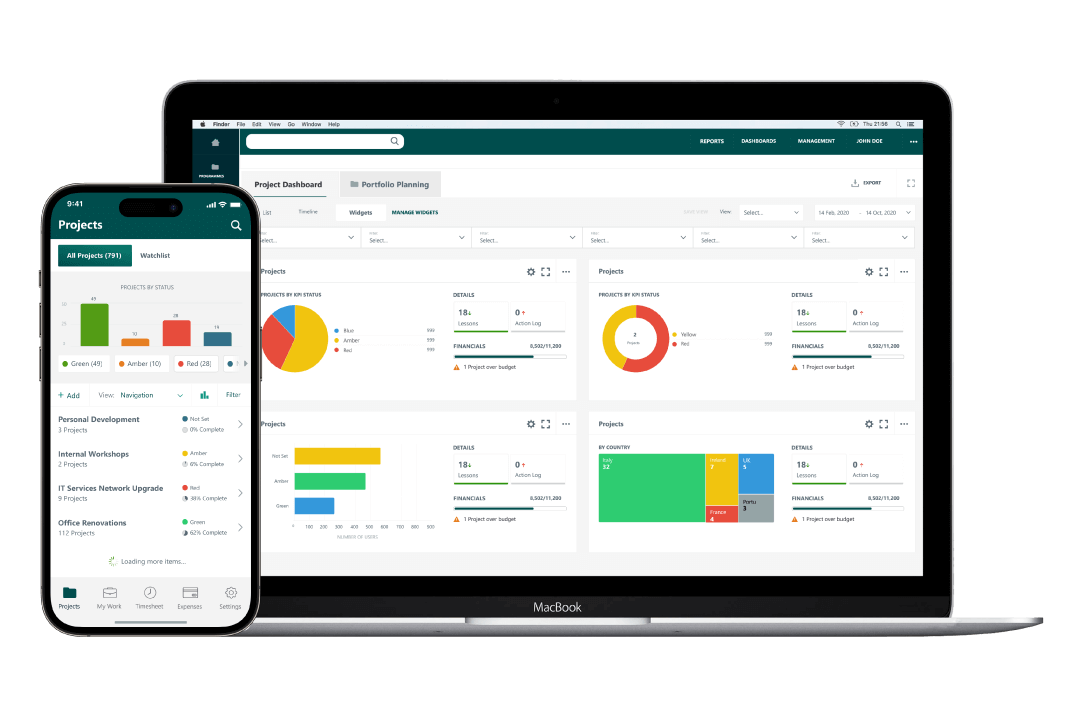
Cora's portfolio analytics give PMO leaders a real-time financial picture across the entire portfolio. Cost-to-complete, milestone slippage, budget variance, and risk exposure are surfaced at the program and portfolio level, not buried in project manager status reports.
When leadership can continuously see the full financial picture, not just quarterly, ROI optimization becomes an active management discipline rather than a post-mortem exercise.
Project portfolio optimization requires balancing risk and return across the pipeline.
No single project in a pharma pipeline carries zero risk. The PMO's job is to construct and manage a portfolio where the aggregate risk-return profile meets the company's strategic targets, even as individual programs succeed, fail, or shift priorities.
Cora supports project portfolio optimization by enabling PMO leaders to model portfolio scenarios, adding a program, deprioritizing another, or reallocating capacity, and see the downstream impact on schedule, cost, and strategic coverage before committing. That analytical capability is what separates strategic portfolio management from project administration.
Pharmaceutical portfolio management needs integrated resource planning
A delayed Phase II trial is rarely a scientific problem. It is often a resourcing problem, clinical operations staff overallocated across three concurrent studies, or regulatory affairs capacity insufficient to meet a submission deadline.
Cora connects project timelines to resource capacity planning so that portfolio leaders see resourcing constraints before they become schedule failures. PMOs managing 20 to 100 concurrent programs cannot manage resource risk in spreadsheets. They need it surfaced automatically at the portfolio level.
Executive decision dashboards give pharma leadership real-time portfolio visibility.
Static reporting cycles no longer fit the pace of pharmaceutical decisions
Board members and C-suite executives in pharma companies make capital allocation decisions, approving phase transitions, greenlighting new indications, pulling resources from underperforming programs, on cycles that move faster than quarterly business reviews.
Cora's executive decision dashboards deliver live portfolio status to leadership without requiring the PMO to spend three days preparing a slide deck. Pipeline status, financial performance, milestone adherence, and risk flags are visible in real time, formatted for the audience consuming them.
Executive dashboards should support decisions, not just report status
The difference between a reporting tool and a decision support tool is whether the data tells leadership what action to take, not just what happened. Cora's dashboards are built around decision prompts, which programs are at risk, which resource conflicts are approaching, and where the portfolio is underperforming against plan.
A pharma CFO looking at Cora's financial dashboard can see portfolio-level ROI projections updated in real time. A COO can see capacity loading across functional areas. A PMO leader can see program-level schedule health with drill-down to the tasks driving variance. Each audience gets the view they need without a custom report being built for every request.
Large enterprise software requirements in regulated pharmaceutical environments
Pharmaceutical PMOs need audit trails, not just dashboards
Any large enterprise software deployed in a regulated pharmaceutical environment has to meet a higher bar than commercial off-the-shelf tools. Data governance, access controls, audit logs, and change history are compliance requirements, not nice-to-haves.
Cora provides the governance architecture that pharma PMOs need: role-based access, full audit trails on data changes, and documented configuration management. When a regulatory auditor asks how a project's budget was approved or when a milestone was last updated, Cora provides a defensible answer.
Integration with existing enterprise systems matters at scale
Pharma PMOs at large organizations are not starting with a blank infrastructure. They have ERP systems, clinical trial management platforms, finance systems, and HR systems that already hold data. A portfolio management platform that sits in isolation from those systems creates reconciliation work, not efficiency.
Cora integrates with the enterprise systems that pharma organizations already run. Project financial data flows in from ERP. Resource data flows from HR platforms. Cora becomes the aggregation and analysis layer, not a data silo requiring manual feeds.
How Cora Systems can help pharmaceutical PMO leaders
Cora Systems works with pharmaceutical PMO leaders managing complex, multi-program portfolios in which financial risk and regulatory compliance are non-negotiable constraints.
The Cora platform provides:
Real-time portfolio analytics that give PMO leaders continuous visibility into schedule performance, budget variance, and risk exposure across the full pipeline.
Executive decision dashboards configured for C-suite and board audiences, delivering portfolio health metrics without the overhead of manual reporting cycles.
Scenario modeling for project portfolio optimization, so leadership can evaluate pipeline trade-offs, resourcing decisions, phase-gate approvals, and program prioritization, with full downstream impact analysis before committing.
Integrated resource capacity management that connects project timelines to functional capacity, surfacing resourcing constraints at the portfolio level before they become schedule failures.
Enterprise governance and audit capability meeting the data control requirements of regulated pharmaceutical environments.
Cora is already deployed across complex, regulated industries, including aerospace and defense and capital-intensive engineering and operations environments, where the consequences of poor portfolio decisions are material. Pharma PMOs face the same stakes.
See how Cora works for pharmaceutical portfolio management
Request a demo: see Cora in action for pharmaceutical portfolio management
Pharmaceutical PMO leaders managing complex, regulated pipelines need more than a project tracker. They need a strategic portfolio management platform that connects execution data to financial outcomes and gives leadership real-time visibility to act on that data.
Cora Systems delivers that capability. The platform is built for the governance requirements, data complexity, and executive reporting demands that pharma organizations face.
Request a demo with the Cora team to see how the platform handles pharmaceutical portfolio management at enterprise scale.